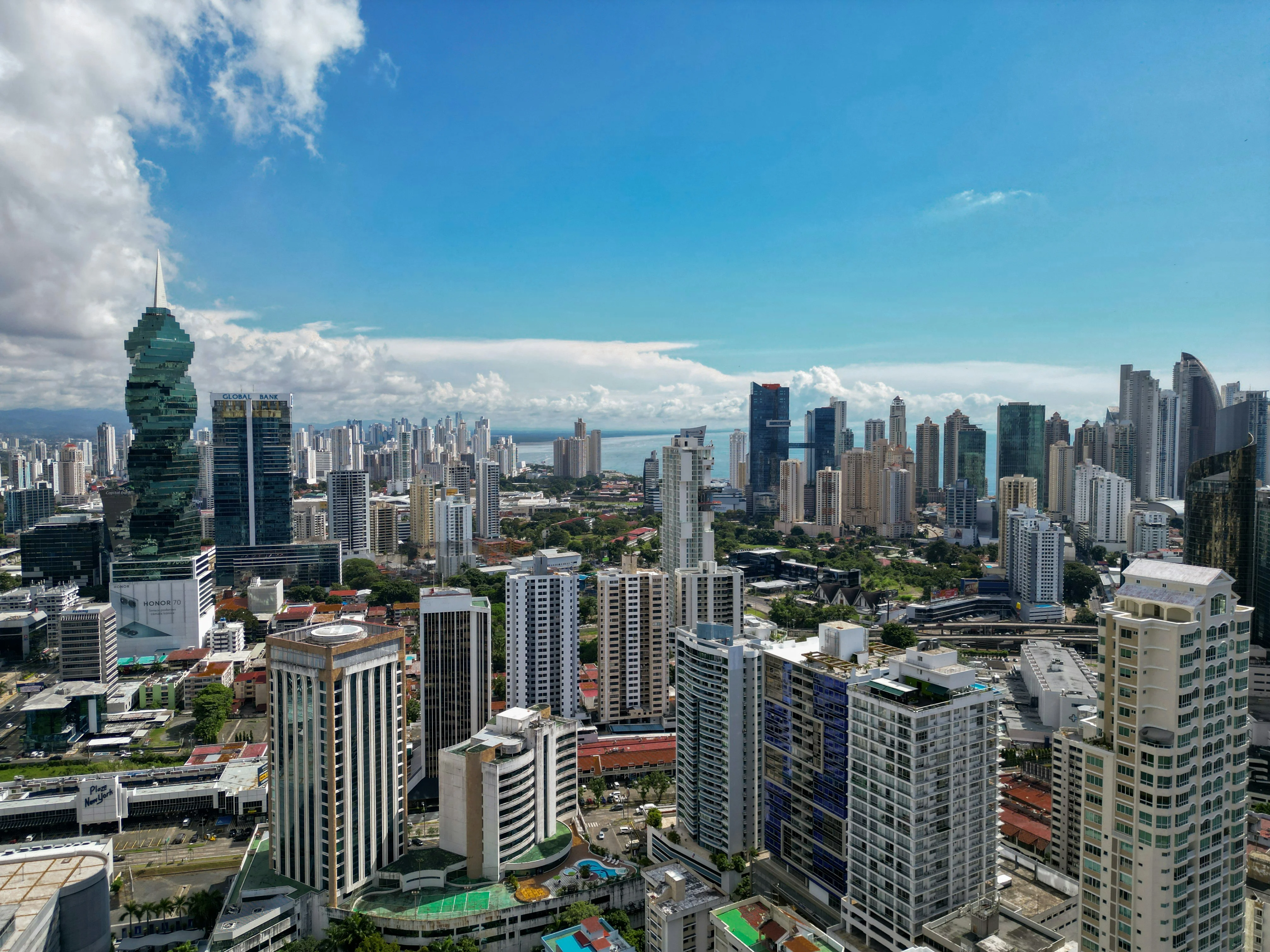
Why Expats Choose Panama City
- Central America's financial hub — Tocumen connects to 90+ destinations direct
- World-class medical care: Pacífica Salud, Hospital Punta Pacifica (Johns Hopkins affiliate)
- Established international schools (IB, American, European curricula)
- Dollarized economy — no exchange rate risk for North American residents
- Modern infrastructure: metro, highways, fiber internet in main zones
- Large, active expat community — networking groups in every industry
What to Know Before Moving to Panama City
- Heat and humidity from May–November are intense — nearly everyone lives with A/C
- Heavy traffic during rush hour, especially Corredor Sur and Vía España
- Cost of living significantly higher than the rest of the country
- Neighborhood inequality is real — choosing the right area matters a lot
Panama City Neighborhoods
Punta Pacífica / Punta Paitilla
Most expensive and safe areas. Oceanfront, high expat density. Rent: $1,500–$4,000+
Costa del Este / Santa María
Planned neighborhoods with houses and condos. Families, international schools nearby. Rent: $1,200–$2,500
San Francisco
Mixed urban area with its own identity. Good value for money. Rent: $800–$1,800
El Cangrejo / Bella Vista
Most cosmopolitan neighborhood. Restaurants, nightlife, very walkable. Rent: $700–$1,500
Casco Viejo (Casco Antiguo)
UNESCO Heritage, boutique and touristic. Renovated but still mixed. Rent: $900–$2,500
Albrook / Clayton
Former Canal Zone, lots of green space. Popular with families with cars. Rent: $1,000–$2,000
Related guides
Frequently Asked Questions
Which neighborhood is best for expats in Panama City?
It depends on your lifestyle. Punta Pacífica and Punta Paitilla offer the highest security and the largest expat community, ideal for those who prioritize convenience and ocean views. Costa del Este suits families with children in international schools. El Cangrejo and Bella Vista are the best value for singles and couples who want walkability and nightlife. San Francisco is a solid middle ground.
Is Panama City safe for expats?
Expat-focused neighborhoods — Punta Pacífica, Punta Paitilla, Costa del Este, San Francisco — are generally safe with normal urban precautions. Panama City has significant inequality, and areas like El Chorrillo or parts of the old city can be unsafe at night. Living in vetted residential buildings and using reputable taxis or ridesharing apps (InDriver, Uber) eliminates most risk for day-to-day life.
What does it cost to live in Panama City per month?
Panama City is Panama's most expensive area. A single professional can manage on $2,000–$2,800/month; a couple in a mid-range apartment typically spends $3,000–$4,500/month including rent ($1,200–$2,000), groceries, utilities, transport, and dining out. Living in a luxury high-rise or frequently using premium services easily pushes that to $5,000+.
How is the healthcare system in Panama City?
Panama City has world-class private hospitals. Hospital Punta Pacífica is a Johns Hopkins International affiliate — one of the top facilities in Latin America. Pacífica Salud, Centro Médico Paitilla, and Hospital Nacional offer excellent specialist care. Private health insurance is strongly recommended; costs are typically 40–60% lower than equivalent care in the US, and quality for elective and specialist treatment is comparable.
What visa options are best for working professionals and investors?
The Friendly Nations visa is the most popular for professionals from eligible countries — it requires demonstrating economic ties (a job offer, business ownership, or a bank deposit) and grants permanent residency. The Qualified Investor visa (minimum $300,000 investment in real estate or approved assets) offers fast-track residency. Remote workers can use the Short Stay Permit, which allows 9 months per year without establishing full residency.
Is Panama City right for you?
Your route guides you in 2 minutes based on your budget and lifestyle.
Find your route →