What does it actually cost to live in Panama? Beyond the travel blogs
Blogs say you can live in Panama for $800 a month. Reality depends on where you live, how you live, and what you expect from your life. Here's the honest breakdown.
If you’ve searched “cost of living in Panama” before landing here, you probably found two types of results: optimistic blogs with headlines like “$800 a month is plenty” and expat forums full of complaints that everything costs more than expected.
Both are true. It depends on who you are, where you live, and what you expect from your life.
This article won’t give you a number. It’ll give you the framework to calculate your own.
The first mistake: treating Panama as if it were a uniform country
Panama has at least four living zones with very different costs:
-
Panama City is expensive by Latin American standards, especially in areas like Punta Pacifica, San Francisco or Costa del Este. A two-bedroom apartment in those areas can cost $1,200–$3,000 per month in rent alone.
-
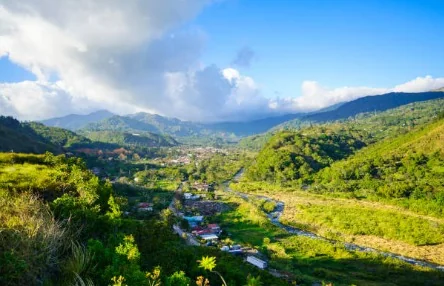
Boquete can be considerably more affordable: house rentals with a garden from $600, cheaper local life, without the costs that come with city living.
-
Coronado and the Pacific coast sit in a middle range, with the added variable that most people there need a car for everything.
-
Bocas del Toro has the lowest rents, but also the least access to services: island-price supermarkets, limited medical access, boat transportation.
When someone tells you Panama costs $X per month, the mandatory follow-up question is: which part of Panama?
The categories that actually matter
Housing (40–55% of typical budget)
Rent is the most variable item. In Panama City, the difference between living in Calidonia vs. Punta Pacifica can be $500 vs. $3,000+ for the same type of apartment.
What influences rent most:
- Zone (neighborhood within the city, or city vs. interior)
- New vs. old (new buildings with amenities cost more)
- Furnished vs. unfurnished (furnished apartments cost more monthly but are more convenient for those arriving without furniture)
- High floor with a view vs. ground floor
Food
Panama has quality supermarkets in major cities (El Rey, Riba Smith, Super 99, PriceSmart). Prices for imported products are comparable to the U.S. in many cases; local products are cheaper.
Eating at local restaurants (fondas, neighborhood Panamanian spots) is affordable. Restaurants aimed at expats or with an international concept can be surprisingly expensive.
A useful note: in Panama City, it’s perfectly possible to eat well and with variety on a moderate budget if you know where to go. Costs jump when you eat exclusively at malls or in high-cost neighborhoods.
Transport
Panama City has the Metro, buses (Metrobús), and taxi/Uber. For those living close to work or in well-connected areas, a car isn’t necessary.
Outside the capital, a personal car is almost indispensable. Add insurance, fuel (prices track the international market), and maintenance.
Healthcare
Panama has one of the best healthcare systems in Central America and the Caribbean. Panama City concentrates most of the reference private hospitals.
The cost of private medical care is considerably lower than in the U.S. for most procedures. Private health insurance is accessible: plans for expats start around $100–$200 per month depending on age and coverage.
What to know: outside of Panama City and David (Chiriquí), specialized medical services are limited. For complex procedures, you’ll need to travel.
Real ranges by zone and lifestyle
These are estimated ranges for a single person living comfortably (not extreme frugal, not luxury):
| Area | Estimated monthly range |
|---|---|
| Panama City | $1,800 – $3,500 |
| Boquete / Chiriquí | $1,200 – $2,200 |
| Coronado / Pacific | $1,400 – $2,500 |
| Bocas del Toro | $1,000 – $1,800 |
Low-end ranges assume modest housing, mostly cooking at home, and using public transport where available. High-end ranges include rent in a pricier zone, regularly eating out, a personal car, and private health insurance.
These are reference estimates based on market research, not guarantees.
The surprises no one mentions
Utilities in the city. Electricity in Panama isn’t cheap, especially if the apartment has air conditioning running constantly. Bills of $150–$300 per month aren’t unusual in air-conditioned apartments.
Initial setup costs. Rental deposit (usually one month), furniture if you arrive without it, service hookups, residency paperwork. The first year always costs more.
Trips back home. Not in the monthly budget but definitely in the annual one. Many expats travel once or twice a year to visit family. From Panama City there are direct connections to many North American and European cities; from the interior, the starting point is the capital.
The cost ranges in this article are reference estimates based on market research for 2025–2026. They do not represent a guarantee of current prices. We recommend making an exploratory visit and checking directly with local residents to validate up-to-date figures.
Ready for the next step?
The quiz guides you in 2 minutes based on your real profile and budget.
Take the quiz →